Greater Manchester
Updated 27 September 2026Manchester
What’s On
Coming up in Manchester
Soonest first. Check the linked source for details before travelling.
 MusicIllustration
 MusicIllustration
 MusicIllustration
 MusicIllustration
- MusicIllustration
 Stage & screenIllustration
- MusicIllustration
- MusicIllustration
- MusicIllustration
- MusicIllustration
- MusicIllustration
- MusicIllustration
More events in Manchester →Showing the first 12 of 95 upcoming listings.
The dates on this page have passed. See later events in Manchester →
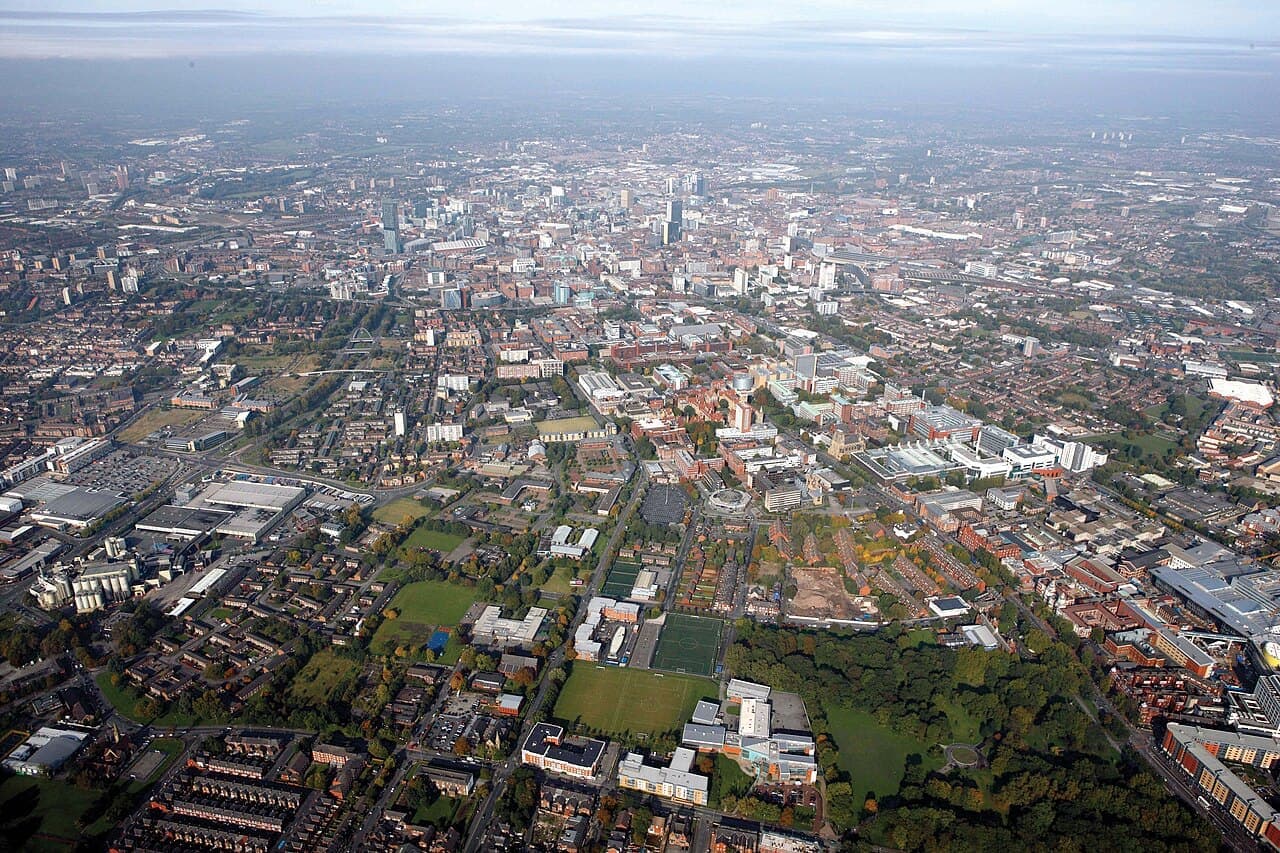
Manchester sits in North West England at the centre of the Greater Manchester city region, on the River Irwell where it meets the Medlock and Irk. The Roman fort of Mamucium once guarded the sandstone bluff at Castlefield; the modern city grew as Cottonopolis, the first industrialised city and the marketplace for the surrounding mills. Today it is known for music, media, universities, Victorian warehouses and a dense cultural quarter of museums, galleries and theatres within walking distance of Piccadilly and Victoria stations.
- Manchester — Wikipedia · retrieved 27 Sept 2026
- Visit Manchester — official tourist board · retrieved 27 Sept 2026
- Science and Industry Museum — plan your visit · retrieved 27 Sept 2026
The town
About Manchester
Around 552,000 people live in the City of Manchester local authority (2021 Census), within a conurbation of nearly three million. The centre mixes Georgian and Victorian warehouses with new towers around Deansgate and Spinningfields; the Northern Quarter keeps independent shops, makers’ studios and bars in the old wholesale streets. Two universities and the Royal Northern College of Music give Oxford Road one of Europe’s densest higher-education campuses, and MediaCityUK across the Irwell in Salford anchors television and digital work.
Everyday trading still runs through Arndale Market, open seven days, and through food halls such as Mackie Mayor in the restored Smithfield market hall. Culture is concentrated and walkable: the Science and Industry Museum occupies the old Liverpool Road station in Castlefield; the John Rylands Library on Deansgate and the People’s History Museum on the Irwell cover books and democracy; the Whitworth sits beside Whitworth Park on Oxford Road; Bridgewater Hall is home to the Hallé. Heaton Park, one of Europe’s largest municipal parks, lies on the city’s northern edge.
Visitors arrive chiefly at Piccadilly, the busiest station outside London after Birmingham New Street, with Metrolink trams linking the centre to outlying boroughs. Christmas markets fill Albert Square and Cathedral Gardens each November and December, and Skate Manchester turns Cathedral Gardens into a covered rink for the winter season. Music, from the Hallé and the BBC Philharmonic to warehouse club nights, remains a strong draw alongside the museums and parks.
- Manchester population change, Census 2021 — ONS · retrieved 27 Sept 2026
- Manchester — Wikipedia · retrieved 27 Sept 2026
- Visit Manchester — official tourist board · retrieved 27 Sept 2026
- Arndale Market — Manchester City Council · retrieved 27 Sept 2026
- Concerts — The Hallé · retrieved 27 Sept 2026
Looking back
A short history
The name derives from Mamucium (or Mancunium), the Roman fort founded around AD 79 near the confluence of the Medlock and Irwell to protect the road between Chester and York. Fragments of the fort remain visible in Castlefield. After the Roman withdrawal the settlement shifted toward the Irwell–Irk confluence; Domesday listed the manor within the hundred of Salford. A market is recorded from 1282, Flemish weavers arrived in the fourteenth century, and by 1540 John Leland called Manchester the fairest and most populous town in Lancashire. Thomas de la Warre’s collegiate church of 1421 later became Manchester Cathedral; Chetham’s Library opened in 1653 as Britain’s oldest free public reference library.
Cotton drove explosive growth from the late eighteenth century. The Bridgewater Canal (1761) cut coal costs; Richard Arkwright’s first Manchester mill rose in 1780; and the Liverpool and Manchester Railway of 1830 was the world’s first intercity passenger railway. The town became Cottonopolis and Warehouse City, the marketplace for south Lancashire and north Cheshire spinning. Peterloo (16 August 1819) left at least eighteen dead when cavalry charged reformers in St Peter’s Square. Engels wrote on the city’s working conditions while living nearby; he and Marx used Chetham’s Library. City status came in 1853. The Manchester Ship Canal opened in 1894, creating the Port of Manchester thirty-six miles inland.
Decline in cotton and heavy industry after the mid-twentieth century was sharp; the port closed in 1982. The IRA bomb of 15 June 1996 wrecked the commercial core and, with the 2002 Commonwealth Games, spurred a long regeneration of shopping streets, apartments and cultural venues. The Metrolink light-rail network opened in 1992 and has since expanded across Greater Manchester. The city remains a centre for higher education, media, music and professional services within the combined-authority city region.
- Manchester — Wikipedia · retrieved 27 Sept 2026
- Science and Industry Museum — plan your visit · retrieved 27 Sept 2026
- Visit — John Rylands Library (University of Manchester) · retrieved 27 Sept 2026
- Visit — People's History Museum · retrieved 27 Sept 2026
Directory
Businesses and places in and around Manchester
Loading places in Manchester…
Feeling adventurous? Climbing, karting, paintball and more in Greater Manchester
Listings from OpenStreetMap contributors (ODbL); food hygiene ratings from the Food Standards Agency (Open Government Licence). The finder above holds our own researched listings. Directory snapshot 6 October 2026.
Quick answers
Manchester FAQs
When is Manchester market?
Arndale Market in the city-centre Arndale trades Monday to Saturday from 9am to 6.30pm and on Sundays from 11.30am to 5.30pm. A separate makers’ market runs in the Northern Quarter on the second Sunday of each month alongside the Craft & Design Centre’s Sunday opening.
- Arndale Market — Manchester City Council · retrieved 27 Sept 2026
- Sundays at Manchester Craft & Design Centre · retrieved 27 Sept 2026
How do I get to Manchester by train?
Most long-distance services arrive at Manchester Piccadilly, managed by Network Rail, with Avanti West Coast trains from London Euston and many regional operators. Manchester Victoria, Oxford Road and Deansgate also serve the centre; Metrolink trams link Piccadilly’s undercroft to other city stops.
- Manchester Piccadilly station — Wikipedia · retrieved 27 Sept 2026
When do the Manchester Christmas Markets open in 2026?
Visit Manchester states Friday 6 November 2026 to Tuesday 22 December 2026 for the main city-centre markets (210 stalls), with Albert Square and Cathedral Gardens continuing until Sunday 3 January 2027.
- What's On This Christmas in Manchester — Visit Manchester · retrieved 27 Sept 2026
How many people live in Manchester?
The 2021 Census recorded 551,938 residents in the City of Manchester local authority (ONS often rounds this to 552,000). That figure covers the metropolitan borough, not the whole Greater Manchester conurbation.
- Area Comparison Summary — Census 2021 — Manchester City Council · retrieved 27 Sept 2026
- Manchester population change, Census 2021 — ONS · retrieved 27 Sept 2026
Is the Science and Industry Museum free?
Yes — general admission is free, though the museum recommends booking free tickets in advance. Some special exhibitions and experiences may charge. It opens daily 10.00–17.00 and closes 24–26 December and 1 January; construction work means some buildings are temporarily closed.
- Science and Industry Museum — plan your visit · retrieved 27 Sept 2026
For local businesses
Advertise to people who already live in Manchester
Labelled placements on this page, kept clearly apart from the listings.
Open the advertiser portal