Merseyside
Updated 29 September 2026Liverpool
What’s On
Coming up in Liverpool
Soonest first. Check the linked source for details before travelling.
 CommunityIllustration
 Markets & foodIllustration
No checked upcoming events are listed here yet.
Places to explore in and around Liverpool
- Liverpool Everyman and PlayhouseArts, culture & venues
- Liverpool CathedralAttractions & days out
- Sefton Park Palm HouseParks & outdoors
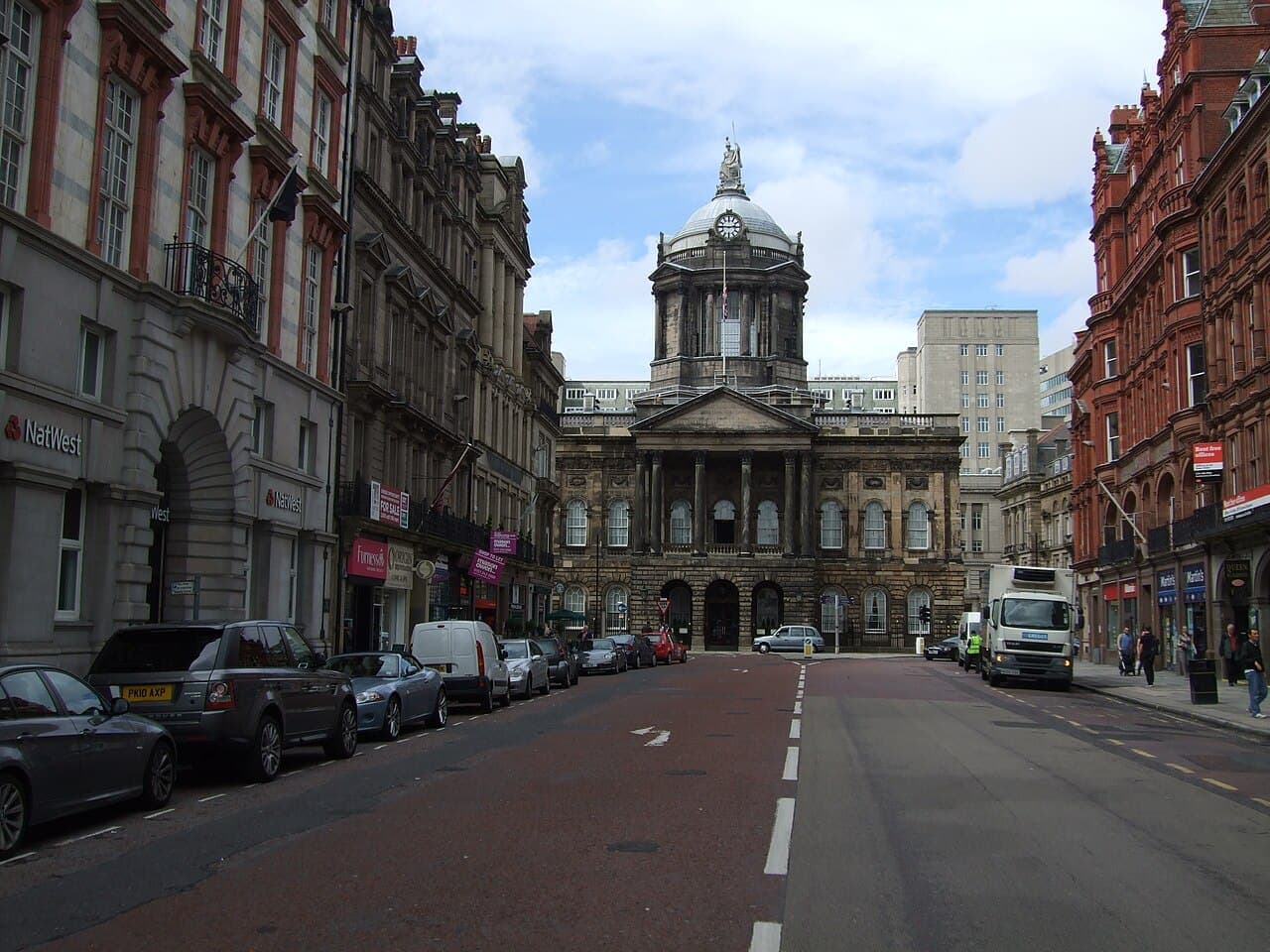
Liverpool is a port city on the eastern side of the Mersey estuary in Merseyside, about 178 miles north-west of London. It was made a borough by King John in 1207 and grew into one of Britain's major ports. It has the Royal Albert Dock, two cathedrals and is the home city of The Beatles.
- Liverpool — Wikipedia · retrieved 29 Sept 2026
- Visit Liverpool — Liverpool City Region Guide · retrieved 29 Sept 2026
The town
About Liverpool
The 2021 Census counted 486,088 residents in the city itself, and the wider Liverpool City Region had an estimated 1,554,642 people in 2019. Its population is one of the most varied in the north of England; the city is home to what is described as the UK's oldest Black community and to Europe's oldest Chinese community. Music is a large part of local identity, and recording artists from the city have topped the UK singles chart more often than those from anywhere else.
Visitors tend to start on the waterfront and at the Royal Albert Dock, where Tate Liverpool and The Beatles Story sit beside restaurants and shops. National Museums Liverpool says all the museums and galleries in its group have free admission, including the World Museum, the Museum of Liverpool, the Walker Art Gallery, the Merseyside Maritime Museum and the International Slavery Museum. Further inland, the Bluecoat on School Lane is a working arts centre with galleries, a cafe and independent shops, and the Cavern Club still offers live music every day.
The Royal Liverpool Philharmonic Orchestra is based at Philharmonic Hall, which also programmes comedy and contemporary music, and the Everyman and Playhouse theatres run a year-round schedule of drama, stand-up and a family Christmas show. Along Hope Street the Anglican Cathedral, which calls itself Britain's largest cathedral, stands within walking distance of the circular Metropolitan Cathedral, and the two stand at opposite ends of the same street. In the south, Sefton Park has a Victorian Palm House that is free to enter.
- Liverpool — Wikipedia · retrieved 29 Sept 2026
- Demography of Liverpool — Wikipedia · retrieved 29 Sept 2026
- Visit Liverpool — Liverpool City Region Guide · retrieved 29 Sept 2026
- National Museums Liverpool · retrieved 29 Sept 2026
- The Bluecoat — Liverpool's contemporary arts centre · retrieved 29 Sept 2026
- Liverpool Philharmonic · retrieved 29 Sept 2026
- Liverpool Everyman and Playhouse — What's On · retrieved 29 Sept 2026
- National Museums Liverpool — Wikipedia · retrieved 29 Sept 2026
- Everyman Theatre, Liverpool — Wikipedia · retrieved 29 Sept 2026
- Liverpool Philharmonic Hall — Wikipedia · retrieved 29 Sept 2026
- Liverpool Cathedral — Wikipedia · retrieved 29 Sept 2026
- Liverpool Metropolitan Cathedral — Wikipedia · retrieved 29 Sept 2026
- Royal Albert Dock, Liverpool — Wikipedia · retrieved 29 Sept 2026
- Bluecoat Chambers — Wikipedia · retrieved 29 Sept 2026
- Sefton Park — Wikipedia · retrieved 29 Sept 2026
Looking back
A short history
The place name comes from Old English words meaning a muddy pool or creek. In 1207 King John issued letters patent that turned the settlement into a borough, laid out on seven streets arranged in an H shape. Growth was slow at first. The turning point came in 1715, when the world's first commercial wet dock opened here with room for about 100 ships. St John's Market opened in 1822 and was a model for market halls elsewhere, though it was later cleared in 1964 to make way for a shopping centre.
The Liverpool and Manchester Railway opened in 1830, and Lime Street station opened in 1836 and still operates as a main-line terminus. The Albert Dock was officially opened in 1846. By 1851 about a quarter of the population had been born in Ireland, many of them arriving after the famine. Liverpool was granted city status in 1880 and its university was founded the following year.
The Anglican Cathedral's foundation stone was laid in 1904, it was consecrated in 1924, and a service marking its completion followed in 1978. The Royal Liver Building was opened in 1911 and forms part of the Pier Head group. The May 1941 air raids killed roughly 2,500 people and left more than 70,000 homeless. Merseyside was among the worst-hit regions for unemployment in the early 1980s, and the Toxteth riots broke out in July 1981. Regeneration through the 1990s was followed by Liverpool's year as European Capital of Culture in 2008. The Bluecoat, a Grade I listed building of 1716-17 on School Lane, is the oldest surviving building in the centre.
- Liverpool — Wikipedia · retrieved 29 Sept 2026
- History of Liverpool — Wikipedia · retrieved 29 Sept 2026
- Liverpool Lime Street railway station — Wikipedia · retrieved 29 Sept 2026
- St. John's Market, Liverpool — Wikipedia · retrieved 29 Sept 2026
- Liverpool Cathedral · retrieved 29 Sept 2026
- Liverpool Cathedral — Wikipedia · retrieved 29 Sept 2026
- Royal Liver Building — Wikipedia · retrieved 29 Sept 2026
- Royal Albert Dock, Liverpool — Wikipedia · retrieved 29 Sept 2026
- Bluecoat Chambers — Wikipedia · retrieved 29 Sept 2026
- 1981 Toxteth riots — Wikipedia · retrieved 29 Sept 2026
- The Bluecoat — Liverpool's contemporary arts centre · retrieved 29 Sept 2026
Directory
Businesses and places in and around Liverpool
Loading places in Liverpool…
Listings from OpenStreetMap contributors (ODbL); food hygiene ratings from the Food Standards Agency (Open Government Licence). The finder above holds our own researched listings. Directory snapshot 9 October 2026.
Quick answers
Liverpool FAQs
How many people live in Liverpool?
The 2021 Census counted 486,088 people in the city. The wider Liverpool City Region has more than 1.5 million.
- Demography of Liverpool — Wikipedia · retrieved 29 Sept 2026
- Liverpool — Wikipedia · retrieved 29 Sept 2026
Which station do I use for Liverpool city centre?
Main-line trains arrive at Lime Street. Merseyrail serves the centre from Liverpool Central, Moorfields and James Street.
- Liverpool Lime Street railway station — Wikipedia · retrieved 29 Sept 2026
- Merseyrail · retrieved 29 Sept 2026
Are Liverpool's big museums free?
Yes. National Museums Liverpool says all the museums and galleries in its group have free admission, including the World Museum, the Walker Art Gallery and the Merseyside Maritime Museum.
- National Museums Liverpool — Wikipedia · retrieved 29 Sept 2026
Is Tate Liverpool open?
Yes, but at RIBA North on Mann Island while the Royal Albert Dock building is redeveloped. Entry is free, it opens daily from 10am to 5.50pm, and the dock gallery is due to reopen in 2027.
- Tate Liverpool + RIBA North — Tate · retrieved 29 Sept 2026
Where can I see live music linked to The Beatles?
The Cavern Club offers live music daily from 11am, and The Beatles Story at the Royal Albert Dock is a museum about the band.
- The Cavern Club · retrieved 29 Sept 2026
- The Beatles Story · retrieved 29 Sept 2026
For local businesses
Advertise to people who already live in Liverpool
Labelled placements on this page, kept clearly apart from the listings.
Open the advertiser portal