Derbyshire
Updated 29 September 2026Buxton
What’s On
Coming up in Buxton
Soonest first. Check the linked source for details before travelling.
 Stage & screenIllustration
- FRI4DEC
Sleeping Beauty
Buxton Opera House
Family pantomime at Buxton Opera House from Friday 4 December 2026 to Saturday 2 January 2027.
- Sleeping Beauty — Buxton Opera House · retrieved 27 Sept 2026
 MusicIllustration
 MusicIllustration
 Stage & screenIllustration
 MusicIllustration
 MusicIllustration
- MusicIllustration
- MusicIllustration
- MusicIllustration
 Stage & screenIllustration
 Stage & screenIllustration
More events in Buxton →Showing the first 12 of 13 upcoming listings.
The dates on this page have passed. See later events in Buxton →
Buxton is a spa town in the borough of High Peak, Derbyshire, sitting at about 1,000 feet above sea level. It is known for a warm natural spring, John Carr's Crescent and Frank Matcham's Opera House.
- Buxton — Wikipedia · retrieved 29 Sept 2026
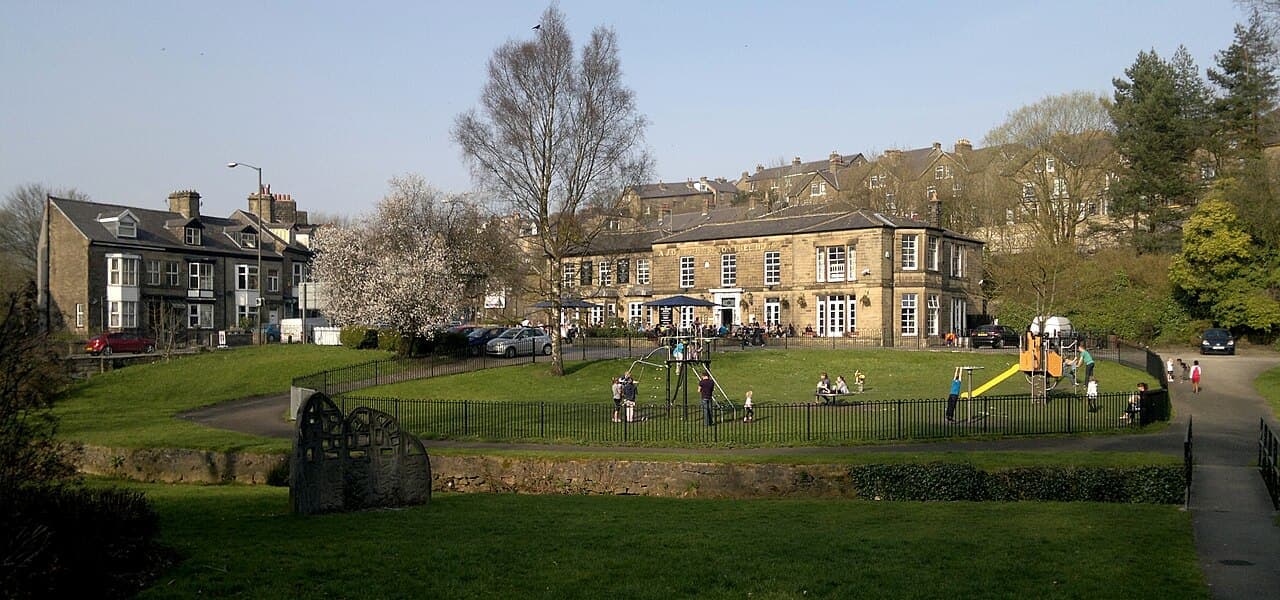
The town
About Buxton
Buxton is a spa town in the borough of High Peak, Derbyshire. It sits at about 1,000 feet above sea level and is often described as the highest market town in England. The 2021 Census recorded 20,048 residents, down from 21,108 in 2011.
The town's identity rests on a geothermal spring that emerges at a steady 28 degrees Celsius. Around it grew a group of grand buildings: John Carr's Crescent, built for the Duke of Devonshire from 1780, Frank Matcham's Opera House of 1903, and the Pavilion Gardens, laid out by Edward Milner.
Pavilion Gardens describes itself as 23 acres of landscaped gardens and play areas dating from 1871, with a miniature railway and picnic areas. The site says it hosts more than 100 events and festivals across the year. Buxton Opera House publishes a programme of theatre, comedy and family shows.
Poole's Cavern is a limestone cave with more than 300 metres open to visitors. It stands a short distance from the town centre, and its own website gives the walk from Buxton station as about 15 minutes. Buxton Country Park next to it has woodland walks, sculpture trails and a path up to Solomon's Temple, which offers wide Peak District views.
Buxton station is the end of the Buxton line and is run by Northern Trains. Services run roughly every half hour towards Stockport and Manchester Piccadilly, and the journey takes just under an hour.
Limestone quarrying has shaped the local economy since the seventeenth century. The Tunstead quarry near the town is described as Europe's largest producer of high-purity industrial limestone.
- Buxton — Wikipedia · retrieved 29 Sept 2026
- Buxton railway station — Wikipedia · retrieved 29 Sept 2026
- Pavilion Gardens · retrieved 29 Sept 2026
- Poole's Cavern — Buxton Civic Association · retrieved 29 Sept 2026
- Buxton Opera House — What's On · retrieved 29 Sept 2026
Looking back
A short history
The Romans built a settlement at Buxton called Aquae Arnemetiae, meaning baths of the grove goddess, and Wikipedia records evidence of occupation throughout the Roman period. By 1460 the spring had been declared holy and dedicated to St Anne, and a chapel stood there by 1498. In 1573 the Earl of Shrewsbury brought Mary, Queen of Scots to take the waters, and she returned for the last time in 1584.
In 1780 William Cavendish, 5th Duke of Devonshire, invested profits from copper mining in turning Buxton into a fashionable spa town modelled on Bath. John Carr designed the Grade I listed Crescent and the Great Stables, which was completed in 1789. In 1859 Henry Currey converted the stables into a charity hospital, and after 1881 Robert Rippon Duke added the Devonshire Dome, then the largest unsupported dome in the world.
The railway reached Buxton in 1863, in a design by Joseph Paxton. The population rose from about 1,800 in 1861 to more than 6,000 in 1881. Pavilion Gardens opened in 1871 to designs by Edward Milner, and Frank Matcham designed the Opera House in 1903. The Buxton Festival began in 1979.
The Crescent reopened as a five-star spa hotel in October 2020 after a refurbishment lasting 17 years. Limestone quarrying, which has shaped the local economy since the seventeenth century, continues at the Tunstead quarry.
- Buxton — Wikipedia · retrieved 29 Sept 2026
- Pavilion Gardens · retrieved 29 Sept 2026
- Buxton Crescent Experience · retrieved 29 Sept 2026
- Buxton Opera House · retrieved 29 Sept 2026
Directory
Businesses and places in and around Buxton
Loading places in Buxton…
Feeling adventurous? Climbing, karting, paintball and more in Derbyshire
Listings from OpenStreetMap contributors (ODbL); food hygiene ratings from the Food Standards Agency (Open Government Licence). The finder above holds our own researched listings. Directory snapshot 9 October 2026.
Quick answers
Buxton FAQs
How do I get to Buxton by train?
Buxton station is the end of the Buxton line, run by Northern Trains. Trains run roughly every half hour towards Stockport and Manchester Piccadilly.
- Buxton — Wikipedia · retrieved 29 Sept 2026
- Buxton railway station — Wikipedia · retrieved 29 Sept 2026
What is Buxton best known for?
Its geothermal spring, John Carr's Crescent and Frank Matcham's Opera House, in a town about 1,000 feet above sea level.
- Buxton — Wikipedia · retrieved 29 Sept 2026
Can I visit the Crescent?
The Crescent Experience explains the building's history and spa; check current visitor sessions before travelling.
- Buxton Crescent Experience · retrieved 27 Sept 2026
Where are the main gardens?
Pavilion Gardens has 23 acres of landscaped gardens and play areas. Buxton Country Park, next to Poole's Cavern, has woodland walks and sculpture trails.
- Pavilion Gardens · retrieved 29 Sept 2026
- Poole's Cavern — Buxton Civic Association · retrieved 29 Sept 2026
For local businesses
Advertise to people who already live in Buxton
Labelled placements on this page, kept clearly apart from the listings.
Open the advertiser portal