Isle of Wight
Updated 28 September 2026Brading
What’s On
Coming up in Brading
Soonest first. Check the linked source for details before travelling.
No checked upcoming events are listed here yet.
Places to explore in and around Brading
- Adgestone VineyardAttractions & days out
- Brading DownParks & outdoors
Brading is a small town on the east side of the Isle of Wight. It is best known for its Roman villa, whose mosaic floors are kept under cover in a museum, and for a royal charter granted in 1280 that earned it the title King's Town. The former harbour behind the town is now marshland, and Brading station sits on the Island Line between Ryde and Shanklin.
- Brading — Wikipedia · retrieved 28 Sept 2026
- Your visit — Brading Roman Villa · retrieved 28 Sept 2026
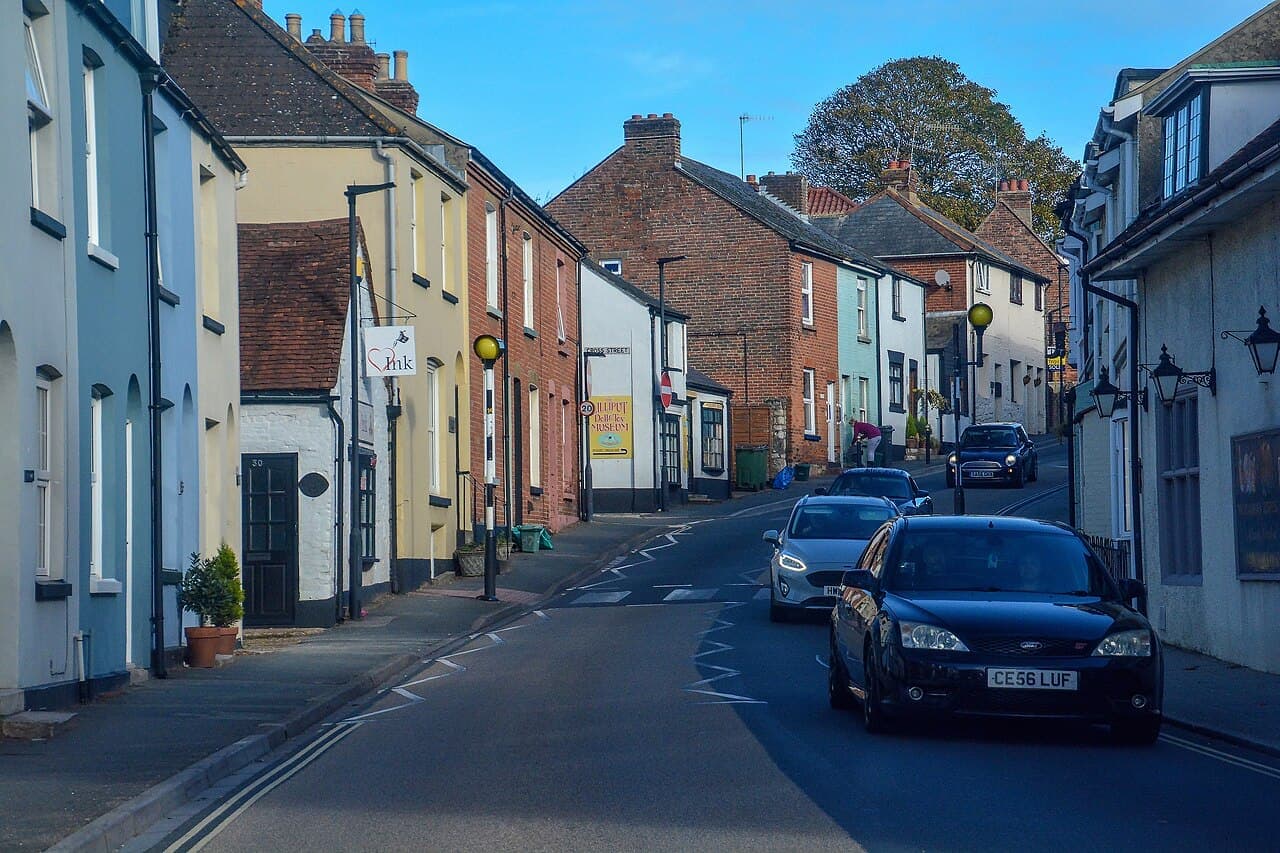
The town
About Brading
Brading is a small place. The 2021 Census counted 1,906 people in the civil parish, which stretches beyond the town to take in Adgestone, Morton and Nunwell. It has its own mayor and town council, and the centre is a short stretch of old buildings around the town hall, with an iron bull-baiting ring outside it and a wooden bull carved by the local artist Paul Sivell. The waxworks that once drew coach parties closed in 2010. Brading Day, the town's fair, is held on the first weekend of July.
Brading Roman Villa stands on Morton Old Road. The museum is open Tuesday to Saturday from 10am to 4pm, with museum entry closing at 3pm, and it has a shop and a café. The site also serves as a venue for local events: in October 2026 these include a community kite afternoon and a monthly drop-in run by Age UK Isle of Wight. Nearby, Adgestone Vineyard offers tours and tastings from Wednesday to Sunday.
Brading Down is a chalk down south-west of the town that overlooks Sandown Bay. It is a Local Nature Reserve, and about 35 hectares are open to the public. The RSPB's Brading Marshes reserve stretches from the village of Brading to the sea at Bembridge Harbour, and it is free to visit all year. The car park at Brading station is the closest to it. Trains on the Island Line connect Brading with Ryde Pier Head, where the ferries arrive, and with Sandown and Shanklin.
- Brading — Wikipedia · retrieved 28 Sept 2026
- Your visit — Brading Roman Villa · retrieved 28 Sept 2026
- Brading Community Kite Day — Brading Roman Villa · retrieved 28 Sept 2026
- Adgestone Vineyard · retrieved 28 Sept 2026
- Brading Marshes — RSPB · retrieved 28 Sept 2026
- Brading Down — Wikipedia · retrieved 28 Sept 2026
- Brading Marshes — Wikipedia · retrieved 28 Sept 2026
Looking back
A short history
The name comes from Old English words usually read as the people who lived on the hillside, a reference to Brading Down. The Roman villa to the south shows the area was well settled and connected by sea nearly two thousand years ago: according to the museum, its south range dates from about AD 100, the north range from about AD 200 and the grand west range from about AD 300. The Domesday survey of 1086 lists only four households here.
In 1280 Edward I gave Brading a charter directly rather than through the lord of the island, which is how it became known as the King's Town, and Edward VI reissued it in 1548 with two yearly fairs. Ships once tied up behind the town, but the harbour silted. An embankment finished in 1594 closed off its northern part, several schemes to drain the rest failed, and the reclamation was only completed when the Bembridge railway embankments were built in the early 1880s. St Mary's church, twelfth-century in origin, has a thirteenth-century tower carried on four piers and a chapel holding monuments to the Oglander family. Legh Richmond, incumbent from 1798 to 1805, is credited with starting the use of movable hymn boards.
Brading station opened on 23 August 1864 on the Isle of Wight Railway, and from 1882 it was a junction for a branch to Bembridge that closed to passengers by 1953. A passing loop removed in 1988 was reinstated in 2021. The villa itself was uncovered in 1880 when Captain John Thorp and the farmer William Munns found the Bacchus mosaic. After a serious flood in 1994 a new visitor centre, completed in 2004, was built to protect the floors.
- Brading — Wikipedia · retrieved 28 Sept 2026
- Discover — Brading Roman Villa · retrieved 28 Sept 2026
- St Mary's Church, Brading — Wikipedia · retrieved 28 Sept 2026
- Brading railway station — Wikipedia · retrieved 28 Sept 2026
Directory
Businesses and places in and around Brading
Loading places in Brading…
Listings from OpenStreetMap contributors (ODbL); food hygiene ratings from the Food Standards Agency (Open Government Licence). The finder above holds our own researched listings. Directory snapshot 9 October 2026.
Quick answers
Brading FAQs
When is Brading Roman Villa open?
The museum is open Tuesday to Saturday from 10am to 4pm, and museum entry closes at 3pm. The café serves from 10am to 3pm.
- Your visit — Brading Roman Villa · retrieved 28 Sept 2026
How do I get to Brading by train?
Brading station is on the Island Line from Ryde to Shanklin. The line has a direct connection with the Wightlink ferry at Ryde Pier Head.
- Brading — Wikipedia · retrieved 28 Sept 2026
- Brading railway station — Wikipedia · retrieved 28 Sept 2026
How many people live in Brading?
The 2021 Census recorded 1,906 residents in the Brading civil parish.
- Brading — Wikipedia · retrieved 28 Sept 2026
Can I visit Nunwell House?
Not normally. The house and gardens are closed for the foreseeable future, with a garden opening for the National Garden Scheme on 19 July 2026 the only date listed on its website.
- Nunwell House and Gardens · retrieved 28 Sept 2026
Is it free to visit Brading Marshes?
Yes. The RSPB reserve is open all year and free to visit.
- Brading Marshes — Wikipedia · retrieved 28 Sept 2026
For local businesses
Advertise to people who already live in Brading
Labelled placements on this page, kept clearly apart from the listings.
Open the advertiser portal