Derbyshire
Updated 28 September 2026Derby
What’s On
Coming up in Derby
Soonest first. Check the linked source for details before travelling.
- FRI27NOV
The Railway Children at Derby Theatre
This weekDerby Theatre
Derby Theatre's family Christmas show, an adaptation of The Railway Children, opens on Friday 27 November 2026 and runs until 2 January 2027. Some performances are audio described, captioned, BSL interpreted or relaxed.
- Derby Theatre — home page · retrieved 28 Sept 2026
- SAT28NOV
Festive Derby launch and Christmas lights switch-on
This weekDerby Market Place
Festive Derby opens on Saturday 28 November 2026 with the Christmas lights switch-on and the return of the Cathedral Quarter Ice Rink on the Market Place, which runs until 31 December. A Nordic Bar in tipis returns alongside the rink.
- Cathedral Quarter Ice Rink and Nordic Bar to return for Festive Derby 2026 — Derby City Council · retrieved 28 Sept 2026
- Festive Derby · retrieved 28 Sept 2026
- SAT5DEC
Sugarplum Christmas Market
Derby Market Hall
A seasonal market of sweet treats, food and gifts at Derby Market Hall on Saturday 5 December 2026, part of the Festive Derby programme.
- Festive Derby · retrieved 28 Sept 2026
 SportIllustration
No checked upcoming events are listed here yet.
Places to explore in and around Derby
- Derby ArboretumParks & outdoors
- Derby CathedralAttractions & days out
- Derby TheatreArts, culture & venues
Derby is a cathedral city and unitary authority on the River Derwent, and the county of Derbyshire is named after it. It grew from a Roman fort and a Danish borough into a market town, then into an industrial centre that was home to Lombe's Mill, an early British factory. The arrival of the railways in the nineteenth century made Derby a centre of the British rail industry, and Rolls-Royce and Alstom's train works keep engineering at the heart of the city today. The old silk mill site, now the Museum of Making, marks the southern end of the Derwent Valley Mills World Heritage Site.
- Derby — Wikipedia · retrieved 28 Sept 2026
- Derby Silk Mill — Wikipedia · retrieved 28 Sept 2026
The town
About Derby
Derby is a cathedral city and unitary authority, run by Derby City Council and independent of Derbyshire County Council. The 2021 Census counted 261,400 people living in the city. Derby is a centre for advanced transport manufacturing: Rolls-Royce makes engines here, Alstom builds trains at the Litchurch Lane works, and Toyota has its UK headquarters at Burnaston, just south-west of the city. Royal Crown Derby, one of the oldest firms in the city, has been making porcelain since the 1750s.
Shopping in the centre falls into three main areas: the Cathedral Quarter around Irongate and Sadler Gate, the St Peters Quarter, and the Derbion shopping centre. The Victorian Market Hall has reopened after a £35.1 million restoration, with permanent and pop-up stalls, cafés, bars and a street food dining area under its restored roof, plus live music and themed markets. Friar Gate holds many of the city's clubs and bars, and Derby has a large number of real ale pubs; the oldest, Ye Olde Dolphin Inne, dates from the late sixteenth century.
QUAD combines a cinema with art exhibitions, events, workshops and a bar. Derby Theatre has been owned by the University of Derby since 2009, which runs it as a professional and learning theatre. The theatre also runs a youth theatre for 8 to 19-year-olds. Entry is free at the Museum of Making, which occupies the Silk Mill on Silk Mill Lane. The Museum and Art Gallery holds many paintings by Joseph Wright of Derby and a large display of Royal Crown Derby porcelain. Derby station, on the Midland Main Line, is the busiest station in Derbyshire and the third busiest in the East Midlands.
- Derby — Wikipedia · retrieved 28 Sept 2026
- How life has changed in Derby, Census 2021 — ONS · retrieved 28 Sept 2026
- Derby Market Hall — Derby City Council · retrieved 28 Sept 2026
- Derby Market Hall — official site · retrieved 28 Sept 2026
- Derby Theatre — Wikipedia · retrieved 28 Sept 2026
- Derby Theatre — home page · retrieved 28 Sept 2026
- Derby QUAD — home page · retrieved 28 Sept 2026
- Derby Museum and Art Gallery — Wikipedia · retrieved 28 Sept 2026
- Visit the Museum of Making — Derby Museums · retrieved 28 Sept 2026
- Derby railway station — Wikipedia · retrieved 28 Sept 2026
Looking back
A short history
The Roman camp of Derventio is thought to have stood at Little Chester, also called Chester Green, the site of the old Roman fort. Anglo-Saxons and then Vikings followed, and the Danes made the town one of the Five Boroughs of the Danelaw; their name for it, Djúra-bý, is usually read as "village of the deer". Lady Æthelflæd of Mercia captured the town in July 917. The church of All Saints was probably founded in about 943 as a royal collegiate church, and its 212-foot Perpendicular Gothic tower was built between 1510 and 1532.
Derby was among the centres of the Industrial Revolution. In 1692 the engineer George Sorocold gave it the first civic piped water system in England, and in 1717 John Lombe and Sorocold built the first water-powered silk mill in Britain beside the Derwent. James Gibbs's Georgian rebuilding of All Saints' was completed in 1725. In December 1745 the Jacobite army of Charles Edward Stuart reached Derby, and a council of war held at Exeter House decided to retreat. The painter Joseph Wright worked in the town, and Erasmus Darwin founded the Derby Philosophical Society after moving there in 1782.
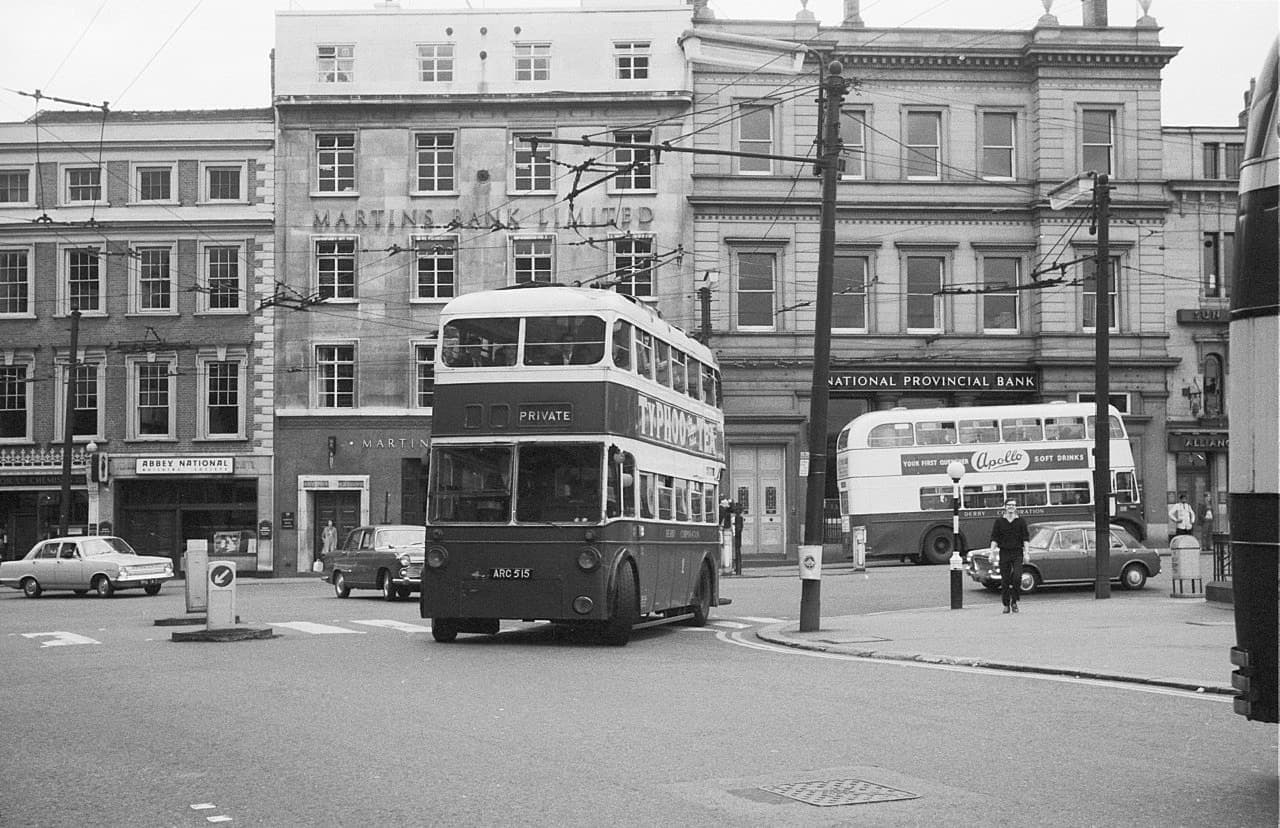
The railway reshaped the town. Derby station first opened in 1839, and the Midland Railway made Derby its headquarters, with locomotive and carriage works beside the line. The Market Hall, designed with an iron and glass barrel-vault roof, was built between 1864 and 1866 at a cost of £29,000. Rolls-Royce opened a car and aircraft factory in 1907. Derby has had a cathedral since 1927, but it did not gain city status until 1977. A boundary extension in 1968 took the population from 132,408 in 1961 to 219,578 in 1971. The silk mill site opened as Derby's Industrial Museum in 1974 and reopened as the Museum of Making on 21 May 2021 after a £17 million redevelopment.
- Derby — Wikipedia · retrieved 28 Sept 2026
- Derby Cathedral — Wikipedia · retrieved 28 Sept 2026
- Derby Silk Mill — Wikipedia · retrieved 28 Sept 2026
- Derby railway station — Wikipedia · retrieved 28 Sept 2026
- Derby Market Hall — Wikipedia · retrieved 28 Sept 2026
- Derby Market Hall — Derby City Council · retrieved 28 Sept 2026
Directory
Businesses and places in and around Derby
Loading places in Derby…
Feeling adventurous? Climbing, karting, paintball and more in Derbyshire
Listings from OpenStreetMap contributors (ODbL); food hygiene ratings from the Food Standards Agency (Open Government Licence). The finder above holds our own researched listings. Directory snapshot 9 October 2026.
Quick answers
Derby FAQs
When is Derby Market Hall open?
The Market Hall on Tenant Street opens Tuesday and Wednesday 8am–3pm, Thursday 8am–5pm, Friday and Saturday 8am–10pm and Sunday 10am–4pm. It is closed on Mondays.
- Derby Market Hall — official site · retrieved 28 Sept 2026
Can I visit Derby Cathedral?
Yes. The cathedral is open seven days a week, from 8.30am on weekdays and 9am on Saturdays, though services may be taking place. Accompanied walk-arounds can be booked for groups at £8 per adult and £3 per child.
- Visit — Derby Cathedral · retrieved 28 Sept 2026
Is the Museum of Making free?
Yes, entry is free. The museum on Silk Mill Lane opens 10am–5pm Tuesday to Saturday and 10am–4pm on Sunday, and is closed on Mondays.
- Visit the Museum of Making — Derby Museums · retrieved 28 Sept 2026
How do I get to Derby by train?
Derby station lies 127 miles north of London St Pancras on the Midland Main Line. It is managed by East Midlands Railway, also served by CrossCountry, and sits south-east of the city centre near the River Derwent.
- Derby railway station — Wikipedia · retrieved 28 Sept 2026
What is the oldest pub in Derby?
Ye Olde Dolphin Inne on Queen Street, a Grade II listed pub built in the late sixteenth century. It is on CAMRA's National Inventory of Historic Pub Interiors.
- Ye Olde Dolphin Inne — Wikipedia · retrieved 28 Sept 2026
For local businesses
Advertise to people who already live in Derby
Labelled placements on this page, kept clearly apart from the listings.
Open the advertiser portal